


When twenty-three-year-old Aishat Baimuradova fled her home last year, she believed she finally had a opportunity to live the way she wanted.
Originating in Chechnya, a conservative Muslim region in Russia, she cut her hair short, stopped covering her head, shaved part of her eyebrow and shared unusual selfies on Instagram.
She informed her new friends she could at last breathe.
In October, Aishat was discovered dead in a leased flat in neighbouring Armenia. Police say she was killed.
Two people were observed leaving the building where she was found, including a woman Aishat had become friends with not long before her death. Both allegedly left for Russia soon afterwards.
Russians do not need a passport to enter Armenia; their internal ID is enough. That also makes it an simple route for anyone trying to flee.

The Chechen Republic: A State Within a State
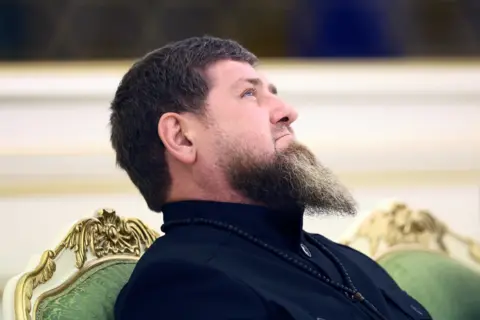
Chechnya, in Russia's North Caucasus, is often portrayed by rights groups as a autonomous region - a place where authority is highly concentrated and loyalty to long-standing leader Ramzan Kadyrov often over-rides laws and formal institutions.
For years, human rights organisations have reported kidnappings, torture and summary deaths in the republic, as well as systematic persecution of those who oppose.
Chechen officials have consistently disputed these claims, complaining of falsehoods aimed at discrediting the region.
Track Record of Opponents Assassinated Abroad
Multiple prominent critics of Chechen authorities have been assassinated abroad.
In 2009, Umar Israilov, a former bodyguard of Ramzan Kadyrov, was murdered in Vienna, where he had applied for asylum. Austrian authorities called the assassination driven by politics and associated the killers to Chechnya.
Former Chechen rebel Zelimkhan Khangoshvili was murdered in a Berlin park in 2019, in an attack attributed to Russian security services.
But Aishat Baimuradova is the first known Chechen woman to have died in questionable circumstances, not long after fleeing Russia.
Aishat's Path to Freedom
Like many other women who escape the region, she had complained of being restricted by her family. She said she was pressured into a marriage, monitored, and barred from leaving home or using her phone.
Aishat arrived in Armenia at the end of 2024 with the help of a crisis group that helps people facing danger in the North Caucasus. She had complained openly of conservative gender rules and the suffocating control women face in Chechnya.
At first, she worked in a small town, then moved to the capital, Yerevan, expecting for a better job and more opportunities.
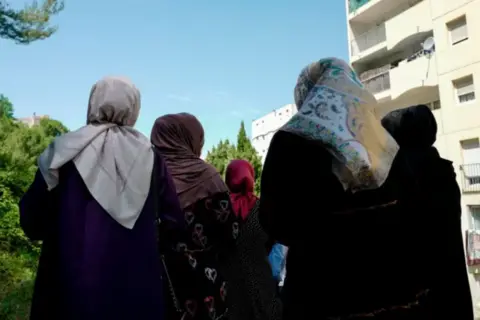
To many who flee, such openness is impossible. Most use false names, avoid showing their faces, and refuse to meet new people. Aishat selected a distinct path. "She really wanted a regular life," her friend who asked to remain anonymous said. "And she wanted to have faith in people."
Relatives Reaction and Rejection
Her family tried to convince her to come back, but when nothing came of it they renounced her, according to support groups.
"They said to her: 'You are no longer our daughter or our wife. We won't touch you - just don't touch us,'" a spokesperson for the support organization explained.
Her uncle told local media the family had no participation in her death.
Fateful Days and Concerning Acquaintances
On the night of her death, Aishat was with a woman she had recently met online, who claimed to come from Dagestan, another Russian republic in the North Caucasus.
People who knew Aishat said it was the woman who had first reached out with her on social media, later coming to Armenia and asking her to parties.
A man seen with her on CCTV as they left the building where Aishat's body was found was reported by sources to be of Chechen origin. Investigative outlets recognized him as a relative of a businessman connected to Ramzan Kadyrov.
Government Response and Inquiry
Chechen authorities dispute any connection to Baimuradova's death, condemning such suggestions as a "propaganda effort". Officials have also criticised groups assisting women who flee, charging them of "undermining family traditions".
Armenian authorities say they are investigating two unnamed people in connection with Aishat Baimuradova's murder, but they have released no further details about them.
Strategic Background
Ramzan Kadyrov is sensitive to people opposing Chechnya from abroad, says Michael Dennis, an expert on Chechen politics.
"The very existence of a diaspora is a evident signal to the entire world that something is wrong in Chechnya. It's a matter of individual honor and public reputation," Mr Dennis explained.
Since the early 2000s, asylum seekers from Chechnya have been coming to Europe - leaving first the war and later Kadyrov's oppressive rule.
But changes to EU migration policy, followed by visa restrictions for Russians because of the war in Ukraine, have all but blocked that route.
That leaves the South Caucasus, where Russians can travel visa-free, as the easiest escape route, but far from the safest.
Impact on Other Women Who Fled
In July, another escapee, 24-year-old Laura Avtorkhanova, was found in a shelter in Georgia by a group of male relatives who reportedly tried to force her into returning to Russia. After being questioned by police she was able to stay safely in Georgia.
For other Chechen women who have fled, Aishat's death has revived a fear that has troubled them since they left Russia.
Several have described how even before her murder they had stayed away of community events, avoided speaking Chechen in public and restricted their social media presence.
Now they worry it may not be sufficient to protect from those who may want to punish them.
"The fear I've lived with all my life - embedded in my DNA - has reawakened with renewed vigour," said one escapee living in Western Europe, who asked to hide her name and precise location.
"It's like sleep paralysis: a monster appears, and I lie there paralyzed, staring into its eyes. It's the fear of being killed."
"You can escape," she said, "but you never really feel free."


